Marcus Vela
Did your irrigation system survive winter?
The first warm weeks of spring are when irrigation problems that developed over winter make themselves known. Here is what to check before you turn your system on for the season.
Every spring we get calls from homeowners whose irrigation systems are not working the way they should. Broken heads, leaking valves, zones that will not turn on, coverage gaps that were not there last fall. Most of these problems trace back to winter, either freeze damage that was not prevented by a proper winterization or physical damage from snow removal equipment, landscaping work, or frost heave.
Before you turn your system on for the season, there are a few things worth checking. The first is your backflow preventer. This is the device, usually mounted on the wall of your house or on a pipe above ground near your foundation, that prevents irrigation water from flowing back into your drinking water supply. Backflow preventers are highly vulnerable to freeze damage because they hold water and are often in exposed locations. Look for cracks in the housing or fittings. A damaged backflow preventer needs to be replaced before you operate the system.
The second thing to check is the controller. Make sure the programming is still intact after winter. Battery backup should have preserved your settings, but it is worth running through each zone manually at the controller before you do a full startup to confirm everything is responding.
The third check is a visual walk of the property before startup. Look for heads that are tilted, cracked, or have been knocked out of position by foot traffic or snow removal. Look for areas where the ground has heaved and lifted heads above grade. Look for any new plantings or hardscape added over winter that might now be blocking spray patterns.
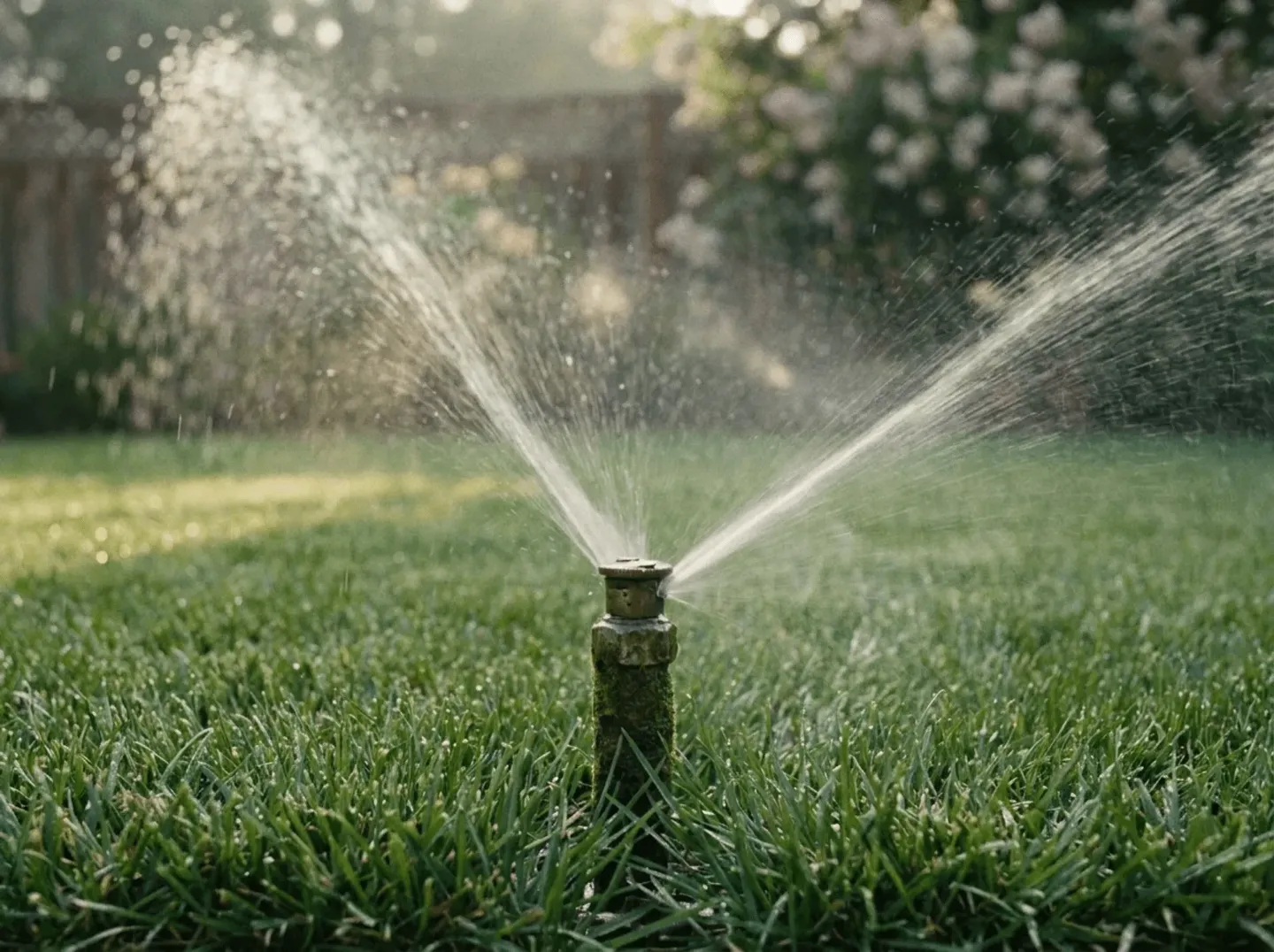
Once you do your startup, run each zone and watch it complete a full cycle. You are looking for heads that are not popping up, spray patterns that are hitting hardscape instead of lawn or beds, and any obvious leaks at the head or along the line. Coverage gaps often show up as dry areas in the lawn two to three weeks after the system has been running.
If you find problems, get them addressed early in the season. A zone that is not covering properly will show up as a dry stressed area by July, and by then the damage to the lawn or plantings may already be done.